

You have worked hard for weeks. You eat better, train regularly, and stick to your plan. Then you compare today's progress photo with one from last week. They look almost the same. Did anything actually change?
Many people make this mistake. Some take photos every day and expect quick results. Others wait months before taking another photo. By then, it becomes difficult to tell whether their plan is working.
Progress photos help you track changes in your body shape, muscle definition, and overall body composition.
So, how often should you take progress photos? For most people, every two to four weeks works well. This gives your body enough time to show visible changes while reducing the effect of daily fluctuations such as water retention and bloating.
Why the Best Progress Photo Schedule Depends on Your Goal
The best schedule depends on your fitness goal. Fat loss, muscle gain, and body recomposition happen at different rates.
Many people aim to lose approximately 0.5 to 1 kilogram per week as part of a healthy weight-loss plan. Building muscle usually takes longer, while body recomposition requires time because you are losing fat while building muscle.
Research has found that resistance training combined with a high-protein diet can improve body composition over several weeks. That is why comparing photos taken only a few days apart rarely reveals meaningful changes.
Beginners and people with more fat to lose may notice results sooner. If you are already lean or have trained for years, visible changes may take longer.
For fat loss, checking every two weeks usually works well. For muscle gain, waiting three to four weeks often makes changes easier to see.
Best Progress Photo Schedule by Fitness Goal
| Goal | Recommended Frequency | Why should I use this schedule? |
|---|---|---|
| Fat loss | Every 2 weeks | Steady fat loss becomes easier to see. Noticeable visual changes often take several weeks. |
| Aggressive cut | Weekly to every 2 weeks | More frequent photos can help you monitor changes during a short-term cut. |
| Muscle gain | Every 3–4 weeks | Muscle grows slowly, and visible changes often take 8–12 weeks. |
| Body recomposition | Every 2–4 weeks | Changes in body shape may appear even when the number on the scale remains similar. |
| Maintenance | Once a month | Changes are usually small, so monthly photos provide enough information. |
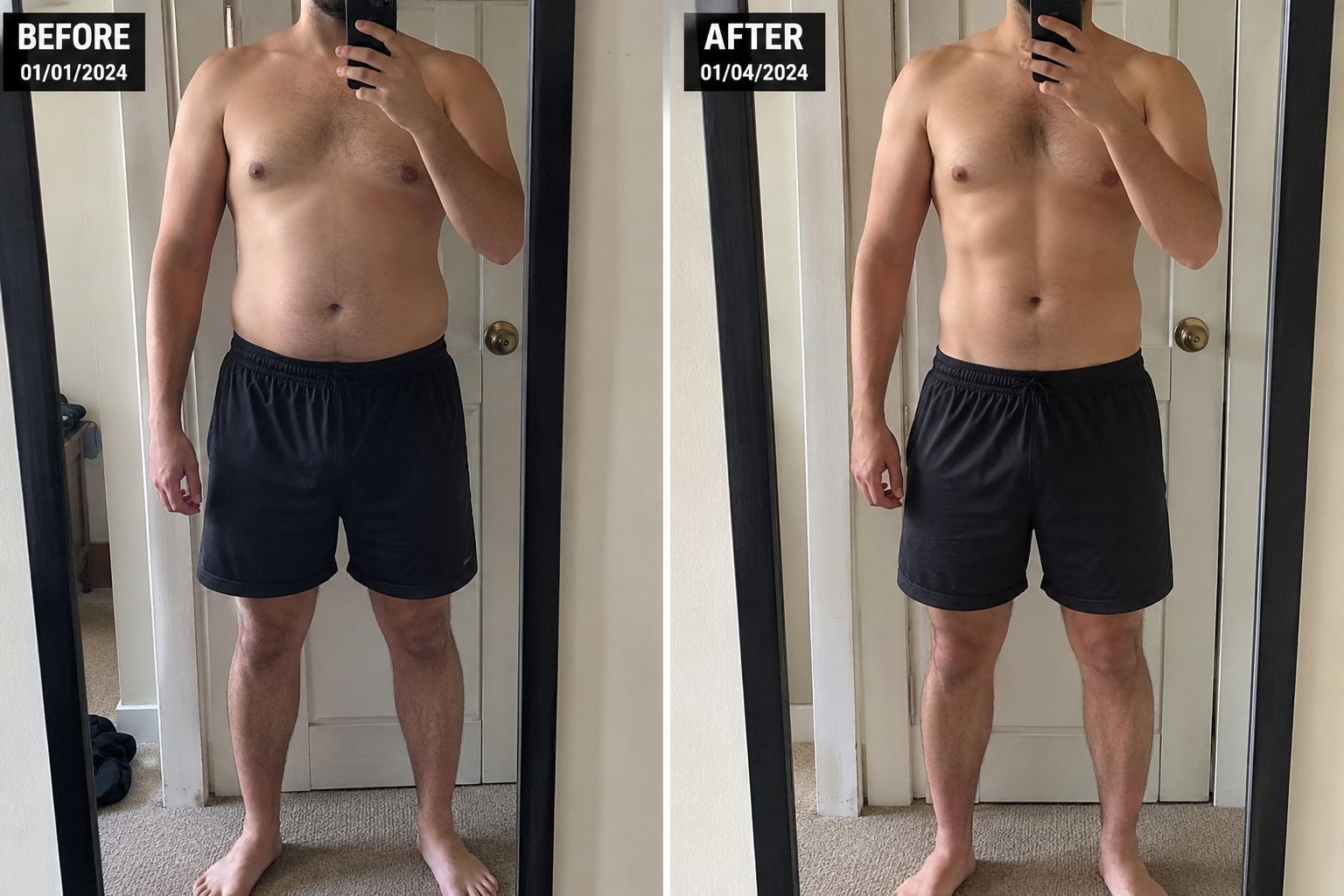
Why Taking Progress Photos Too Often Makes Progress Harder to See
Taking progress photos every day can be confusing and rarely provides useful feedback. Your body fat and muscle mass do not change enough from one day to the next to produce meaningful visual differences.
Several temporary factors can affect how your body looks:
- Water retention: Foods high in sodium can cause your body to retain more water.
- Carbohydrates and glycogen: Your body stores carbohydrates as glycogen, which also holds water.
- Bloating and digestion: A large meal or slower digestion can temporarily change how your stomach looks.
- Hormonal changes: Normal hormonal fluctuations can affect water retention and appearance.
- Sleep quality: Poor sleep may temporarily affect water retention.
- Workout pump: Your muscles can look fuller for several hours after exercise.
These changes are temporary. They do not necessarily mean you gained body fat or lost muscle. Meaningful changes in body composition generally take weeks rather than days.
Why Waiting Too Long Between Progress Photos Can Hide Progress
Waiting several months between photos does not slow your physical progress. However, it may delay your ability to notice trends and determine whether your plan is working.
Long gaps can make it harder to identify gradual changes or decide when your training or nutrition plan needs an adjustment. Taking photos regularly gives you more consistent information without encouraging you to react to daily fluctuations.
Long gaps may also affect motivation. You could overlook steady improvements and feel as though nothing has changed.
For most people, taking progress photos every two to four weeks provides a useful balance. It gives your body time to change while helping you recognize longer-term trends.
How to Take Accurate Progress Photos Every Time
Taking progress photos is helpful, but taking them consistently is even more important. Small differences in lighting, camera angle, posture, or distance can make comparisons misleading.
Keep every photo as similar as possible so that visible differences are more likely to come from changes in your body rather than the camera setup.
Follow these tips:
- Use the same time of day: Take your photos in the morning, after using the bathroom and before eating or drinking.
- Keep the setup the same: Stand in the same place and keep the camera at the same height, angle, and distance.
- Wear the same outfit: Use underwear, swimwear, or fitted workout clothes that make changes easy to compare.
- Capture the same angles: Take front, side, and back photos during every check-in.
- Use consistent posture: Stand naturally without flexing, pulling in your stomach, or changing your pose.
- Mark your positions: Mark where your feet and camera should go so you can recreate the setup.
- Compare with your baseline: Occasionally compare your latest photos with your first set, not only the previous check-in.
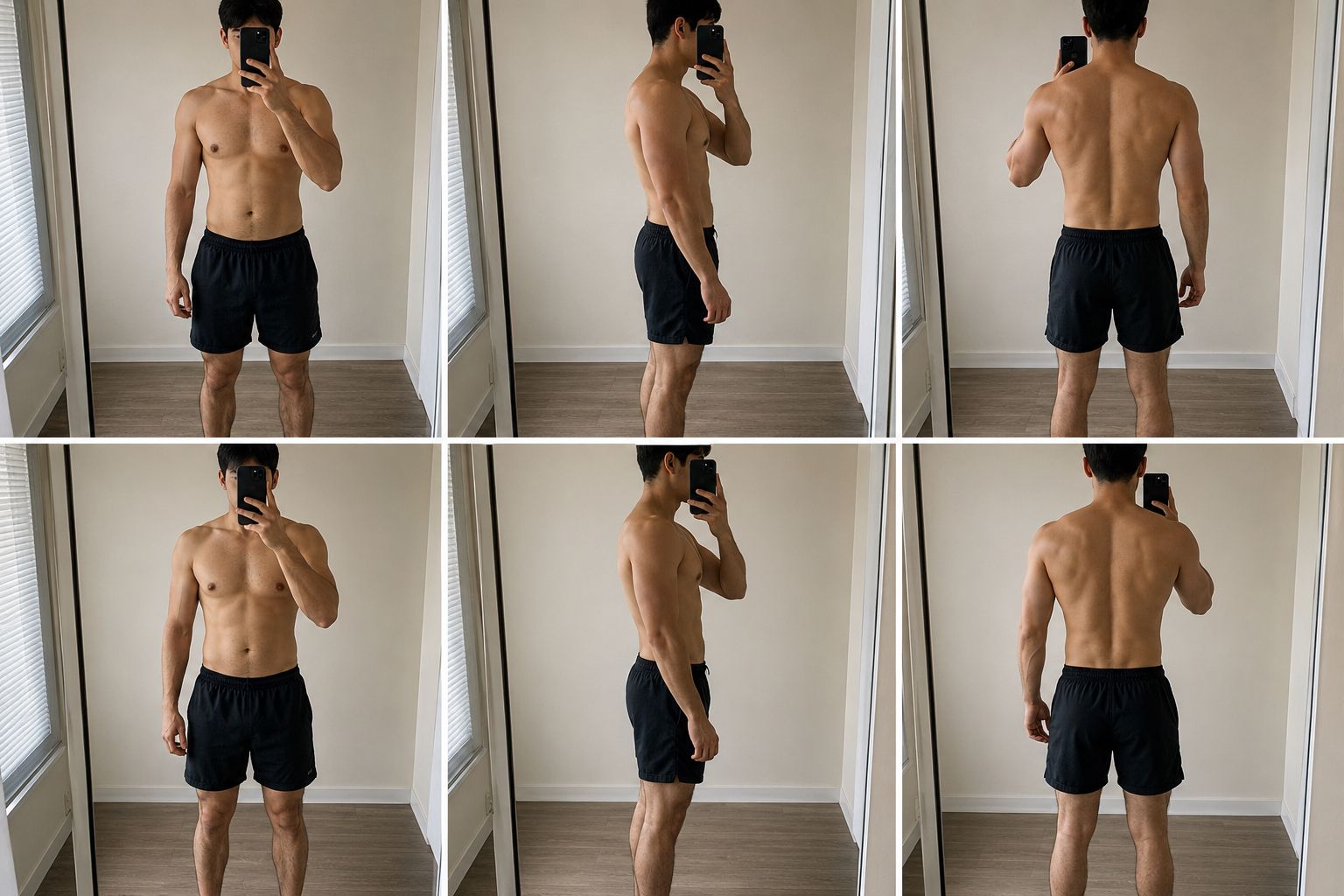
If keeping your progress photos consistent feels difficult, the Body Tracker app can help. It includes scheduled check-in reminders, automatic pose detection, and a timeline that makes comparing photos over time easier.
Final Thoughts
Real progress takes time. Taking progress photos every two to four weeks makes meaningful changes easier to recognize.
For a more complete view of your progress, combine photos with body measurements, strength improvements, weight trends, and changes in how your clothes fit.
Together, these methods provide a clearer picture than relying on the scale alone.
Frequently Asked Questions
Weekly photos can be useful during a short-term or faster fat-loss phase. For most people, taking photos every two to four weeks makes visible changes easier to notice.
Yes. Monthly photos work well when changes are happening slowly. They help you track long-term progress without focusing on normal daily fluctuations.
Take your photos in the morning, after using the bathroom and before eating or drinking. Keep the lighting, clothing, pose, and camera position consistent.
Yes. Progress photos can reveal changes in muscle definition and body shape even when your scale weight remains similar.
Use both rather than relying on either one alone. Progress photos, weight trends, body measurements, strength improvements, and changes in how your clothes fit provide a more complete view of your progress.